
Aug 27, 2026

How well do you know the place where you live?

Not the city.

Not the country.

Your actual neighborhood.

The little shop on the corner. The park you walk past. The café you've never tried. The person who always seems to be walking the same dog at the same time every morning.

We spend so much time dreaming about faraway places that we sometimes forget to explore the one we're already in.
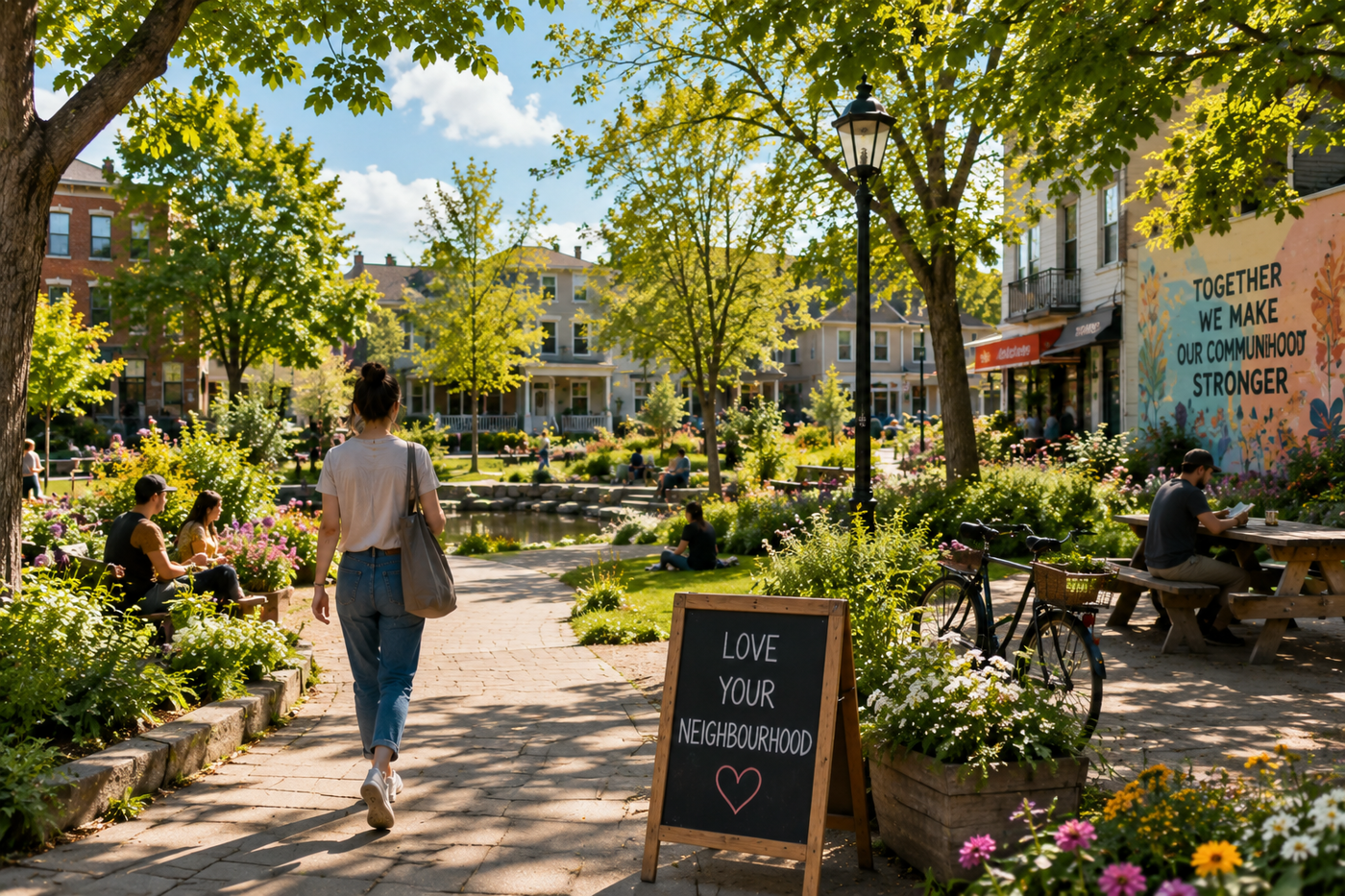
Start with a walk

Leave the usual route behind.

Take a different street.

Walk a little slower.

Look at the buildings.

Notice the trees.

See what's changed since the last time you were paying attention.

You might discover a small business you've never noticed, a quiet courtyard or a shortcut that somehow took you years to find.

You don't need a destination.

Curiosity is enough.

Become a regular somewhere

There is something special about becoming a familiar face.

Visit the same café occasionally.

Shop at the local market.

Use the neighborhood bakery.

Say hello to the people working there.

Over time, these tiny interactions create something that is difficult to manufacture: a sense of belonging.

You don't need to know everyone's name.

You just need to start recognizing the people and places around you.

A neighborhood becomes different when it stops being somewhere you live and starts becoming somewhere you know.

Support what you want to keep

Every neighborhood has businesses that give it character.

The independent café.

The small restaurant.

The bookstore.

The repair shop.

The market stall.

The family-run store.

When we spend money locally, we're helping those places continue to exist.

And that matters.

Because once a neighborhood loses all its independent places, it can become strangely interchangeable.

The same chains.

The same signs.

The same experience.

Local businesses give places personality.

Supporting them is one small way of protecting that personality.

TED Talk by Theaster Gates about transforming abandoned buildings in his Chicago neighborhood into community spaces that bring people together.

Look after shared spaces

A neighborhood belongs to more than the people who own buildings there.

Parks, streets, public spaces and community areas are shared.

That means we all have a role in looking after them.

Put rubbish where it belongs.

Pick something up when you see it.

Respect green spaces.

Don't damage things that everyone else has to use.

Small acts of care send a simple message:

This place matters.
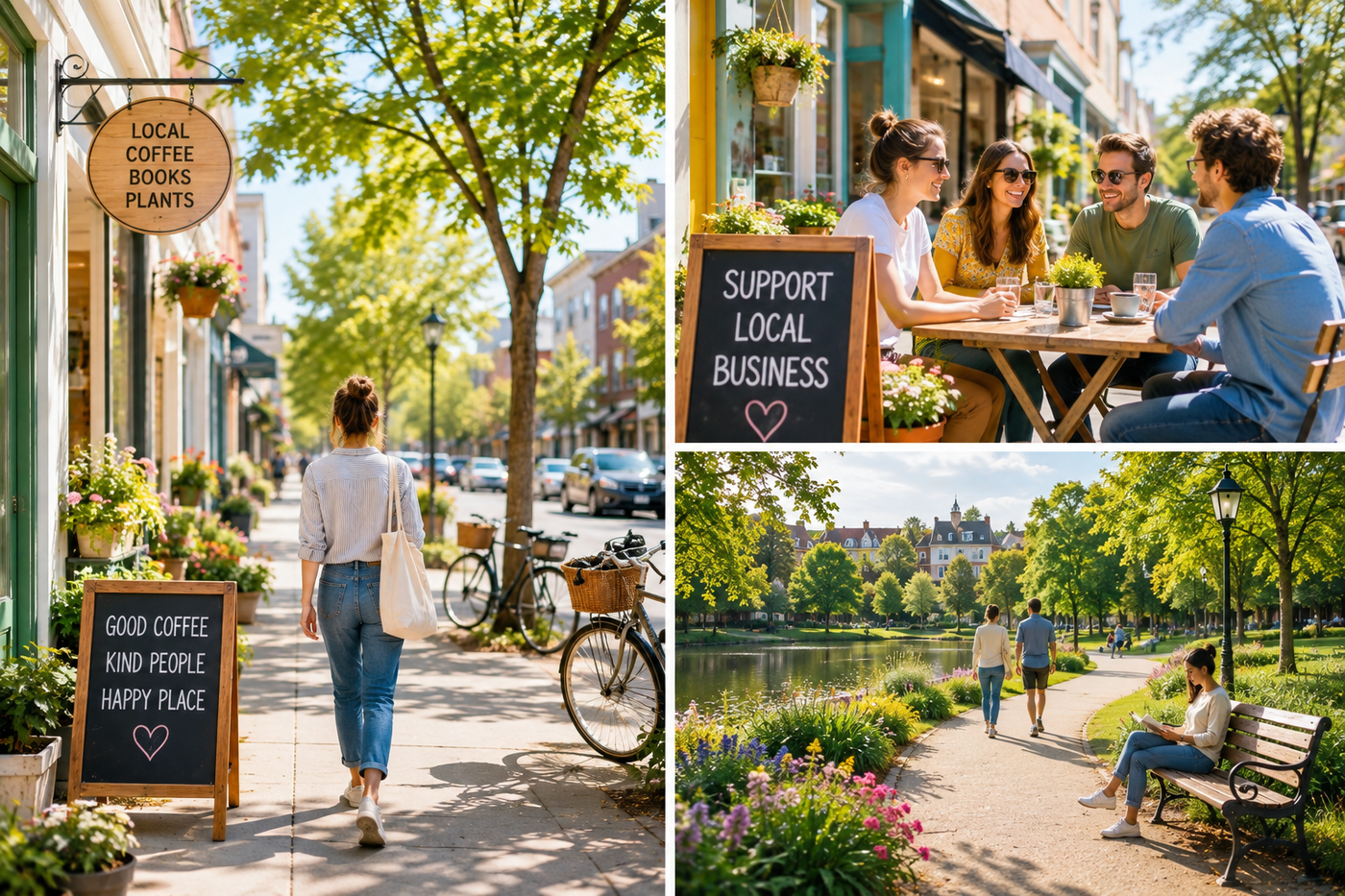
You don't need to travel to explore

There is a funny contradiction in modern travel.

We might fly across a continent to discover somewhere new, then spend years living within walking distance of places we've never visited.

Exploration doesn't require a passport.

It requires attention.

Try being a tourist in your own neighborhood for an afternoon.

Find a place you've never been.

Take public transport somewhere you've never had a reason to go.

Try a local dish.

Visit a small gallery.

Walk along a different street.

You may be surprised by how much is waiting nearby.

Connection starts close to home

The world can feel enormous.

And that's wonderful.

There are always new places to discover, new people to meet and new experiences waiting somewhere beyond the horizon.

But connection doesn't have to begin far away.

It can begin with the street outside your door.

Know your neighborhood.

Support it.

Walk through it.

Talk to people.

Take care of it.

And maybe, before planning the next adventure thousands of kilometers away, take one closer look at the place you've been calling home.

You might discover that you haven't really seen it yet.


Small choices. Real impact. One neighborhood at a time.

Aug 26, 2026

There is a moment at the end of every journey when you finally arrive.

The train doors open.

The plane lands.

The car stops.

You pick up your bag and think:

"We're here."

But what if arriving was never the whole point?

We can become so focused on reaching the destination that we forget everything that happened between leaving home and getting there.

The journey changes you

Travel gives us something that everyday life sometimes doesn't.

It interrupts the routine.

Suddenly, you're navigating unfamiliar streets, hearing different languages, tasting unfamiliar food and figuring out how things work.

You become more alert.

More curious.

Sometimes more patient.

You learn that there isn't always one right way to do something.

And that can stay with you long after you've returned home.

The destination might be on the map.

The experience is what happens along the way.

Don't rush through the middle

We've become very good at treating transportation as an inconvenience.

Get on.

Get there.

Get off.

Next.

But a journey can be much more than that.

A train window can become a moving landscape.

A ferry can turn a crossing into a moment to breathe.

A walk can reveal an entire neighborhood.

A bus ride can show you the ordinary life between two tourist destinations.

Even waiting can sometimes become part of the experience.

You don't have to enjoy every minute of every journey.

But you can stop treating the entire journey as something to endure.

The unexpected is part of travel

Plans are useful.

They keep us from missing the train.

But travel rarely follows the plan perfectly.

A delay.

A wrong turn.

A closed restaurant.

A sudden change in weather.

A conversation that lasts longer than expected.

These things can be frustrating.

They can also become the stories you tell later.

The perfect itinerary leaves very little room for the unexpected.

A little flexibility can leave room for adventure.

Arriving isn't the end

When we finally reach somewhere, it's tempting to immediately start thinking about everything we need to see.

Another checklist begins.

But perhaps the first thing to do is simply arrive.

Walk around.

Get a feel for the place.

Notice the rhythm.

Find somewhere to sit.

Have a coffee.

Watch people going about their day.

Let the destination introduce itself before you start ticking boxes.

You might discover that the experience you were looking for isn't at the famous attraction.

It might be around the corner.

And then you go home

Eventually, every journey ends.

You return to the same streets.

The same kitchen.

The same routines.

But if the journey was worthwhile, something has changed.

Maybe you learned something.

Maybe you met someone.

Maybe you discovered a new way of looking at the world.

Maybe you simply came home appreciating your own place a little more.

That's the part of travel that doesn't show up on a boarding pass.

You don't just move from one location to another.

You bring something back with you.

Take your time getting there

The next time you're planning a trip, think beyond the arrival time.

Look at the route.

Look at the alternatives.

Give yourself some breathing room.

Choose the interesting connection when it makes sense.

Walk a little further.

Look out the window.

Talk to someone.

Let yourself be surprised.

Because the destination matters.

Of course it does.

But the journey is where the stories happen.

Travel is about more than arriving.

It's about everything you notice, learn and experience before you get there.


Small choices. Real impact. One journey at a time.

Aug 25, 2026

We spend an incredible amount of time somewhere other than where we actually are.

Thinking about yesterday.

Planning tomorrow.

Checking messages.

Reading notifications.

Worrying about the next thing.

Even when we're sitting somewhere beautiful, our minds can be several places at once.

And sometimes the best thing we can do is surprisingly simple:

Be here.

You don't need to capture everything

Imagine sitting somewhere you've never been before.

There's a beautiful view in front of you.

Your first instinct might be to take a photograph.

That's perfectly fine.

Take one.

Then put the phone away.

Look again.

The first glance is often about recording the moment.

The second can be about actually experiencing it.

Notice the light.

The sounds.

The temperature.

The people around you.

The small details that wouldn't make it into a photograph anyway.

Those details are often what make a memory feel real.

Being present is not doing nothing

Being present doesn't mean sitting perfectly still and trying to empty your mind.

It's simply paying attention to what is happening now.

When you're eating, taste the food.

When someone is talking, listen.

When you're walking, notice where you're walking.

When you're traveling, look out the window.

When you're with someone you care about, give them your attention.

It sounds obvious.

But in a world designed to constantly interrupt us, attention has become something we have to consciously protect.

Stop trying to get somewhere else

We spend so much energy waiting for the next thing.

Waiting for the weekend.

Waiting for the holiday.

Waiting for the next trip.

Waiting for the next milestone.

And then the moment arrives, and we're already thinking about what comes after it.

There's nothing wrong with having plans.

Goals are useful.

Dreams are important.

But don't let the future become so interesting that you stop noticing the present.

Your life isn't happening later.

It's happening now.

Travel is a great teacher

Travel has a way of making us present because unfamiliar places demand our attention.

You have to read the signs.

Listen for your stop.

Figure out where you are.

Notice what's happening around you.

You can't always operate on autopilot.

And that's one of the reasons travel can feel so refreshing.

For a while, the ordinary routines disappear.

You become curious again.

You notice more.

You pay attention.

The good news is that you don't need to travel thousands of kilometers to keep that feeling.

Try bringing some of it home.

Give people your attention

Being present isn't only about places.

It's about people.

When someone is telling you a story, resist the urge to formulate your response before they've finished.

When you're having dinner with friends, maybe leave the phone somewhere out of reach.

When someone asks how you're doing, answer — and ask them the same question.

Attention is one of the simplest ways we can show someone that they matter.

And unlike most gifts, it doesn't need wrapping.

You might miss something

The world is full of tiny moments that don't announce themselves.

A bird landing nearby.

A stranger smiling.

A beautiful reflection in a window.

A funny conversation at the next table.

The smell of rain.

A perfect patch of evening light.

None of these things are particularly important.

And that's exactly why they're easy to miss.

You don't need to turn every moment into a meaningful life lesson.

Just notice it.

Let it happen.

Then keep walking.

Because life isn't made only from the big moments we remember.

It's made from thousands of ordinary moments we barely notice while they're happening.

So today, wherever you are, try something simple.

Put the phone down for a few minutes.

Look around.

Listen.

Breathe.

Be where your feet are.

You don't have to go anywhere else right now.

You are already somewhere.

And that somewhere might be worth paying attention to.


Small choices. Real impact. One moment at a time.

Aug 24, 2026

We often look at the world's biggest problems and feel completely outmatched.

Climate change.

Waste.

Pollution.

Deforestation.

Overconsumption.

The list can feel endless.

And when a problem is enormous, it's tempting to think our individual choices don't matter.

After all, what difference can one person really make?

Quite a lot, actually.

Not because one person can fix everything.

But because change rarely happens one person at a time forever.

Eventually, other people join in.

One small thing is still something

Imagine everyone choosing one thing they could do a little better.

One person walks instead of driving when the journey is short.

Someone else carries a reusable bottle.

Someone repairs a jacket instead of replacing it.

Another person takes the train.

Someone buys from a local business.

Someone plants something.

Someone picks up a piece of rubbish.

None of these actions is going to solve a global problem on its own.

But millions of small choices don't stay small.

They become patterns.

Patterns become habits.

Habits become culture.

And culture can change markets, communities and eventually systems.

Don't underestimate normal people

We sometimes imagine change being created by extraordinary people doing extraordinary things.

Scientists.

Inventors.

Activists.

Entrepreneurs.

Leaders.

And yes, those people matter.

But most of the world is made up of ordinary people.

People going to work.

Making dinner.

Taking their children to school.

Shopping for groceries.

Going on holiday.

Making hundreds of tiny decisions every day.

That's where enormous change can hide.

If a better choice becomes normal for millions of ordinary people, its impact can become anything but ordinary.

Make one choice easier

You don't need to completely redesign your life.

Pick one area.

Maybe food.

Maybe transport.

Maybe shopping.

Maybe energy.

Maybe waste.

Then find one change that feels realistic.

If you drive everywhere, try walking one short journey each week.

If you constantly buy bottled water, carry a reusable bottle.

If you replace things quickly, see whether they can be repaired first.

If you always buy new, look for something second-hand.

The best change isn't necessarily the most impressive one.

It's the one you're actually going to keep doing.

Don't turn sustainability into a competition

There is no prize for being the person who lives the most perfectly sustainable life.

And honestly, trying to achieve perfection can become exhausting.

You will make compromises.

You'll take a flight.

You'll buy something packaged in plastic.

You'll forget your reusable bag.

You'll make a choice you later realize wasn't the best one.

That's fine.

The important thing is not to let one imperfect decision become an excuse to stop caring.

Progress is still progress.

Then help someone else

Once your small change becomes easy, share the idea.

Not as a lecture.

Not as a guilt trip.

Just as something that works for you.

Maybe a friend tries it.

Then another person.

Then someone else discovers an even better idea.

That's how good habits spread.

Not because everyone suddenly becomes perfect.

Because someone starts.

Imagine if we did

What would happen if every person reading this chose one small thing?

Not twenty.

Not everything.

Just one.

And then kept doing it.

Then imagine that choice spreading to another person.

And another.

And another.

We don't know exactly where the ripple would end.

That's the exciting part.

We don't need to know.

We just need to start the ripple.

So today, choose one thing.

Make it small.

Make it realistic.

Make it something you can repeat.

Then do it again tomorrow.

Because maybe changing the world isn't about one enormous action after all.

Maybe it's about billions of small ones.

And maybe yours can be one of them.


Small choices. Real impact. One person at a time.

Aug 23, 2026

We tend to think of making a difference as something complicated.

Donate money.

Start a project.

Change a law.

Build something enormous.

Those things can matter enormously.

But sometimes making the world a little better is much simpler.

Hold the door.

Say thank you.

Let someone merge into traffic.

Pick something up when someone drops it.

Ask someone how they're doing — and actually listen to the answer.

Kindness rarely needs much.

Small moments matter

You probably remember some of the kind things people have done for you.

Maybe someone helped you when you were lost.

Maybe a stranger gave you directions.

Maybe someone noticed you were having a difficult day and simply asked if you were okay.

The moment might have lasted thirty seconds.

You might still remember it years later.

That's the strange power of kindness.

We don't always know the effect our actions have on other people.

A tiny gesture can arrive at exactly the right moment.

Travel gives us plenty of opportunities

When we're somewhere unfamiliar, we're often the ones who need help.

A confusing ticket machine.

A language we don't understand.

A street that isn't where the map says it should be.

A train platform we're desperately hoping is the right one.

Someone helps us.

And suddenly the unfamiliar place feels a little more welcoming.

We can return the favor.

Help another traveler.

Be patient when someone is struggling with the language.

Thank the person serving you.

Give people a little extra time.

Remember that you are a visitor.

Kindness travels surprisingly well.

It isn't weakness

There's sometimes an odd idea that kindness means being soft.

It doesn't.

Kindness requires attention.

It requires patience.

Sometimes it requires choosing not to react when reacting would be easier.

You can be kind and still have boundaries.

You can be kind and still disagree.

You can be kind without allowing people to take advantage of you.

Kindness isn't about being a pushover.

It's about deciding that your actions don't need to make the world harder for everyone else.

Start with the people around you

We often dream about changing the world while overlooking the five people standing closest to us.

A colleague.

A neighbor.

A friend.

A family member.

The person working behind the counter.

The cleaner who arrived before everyone else.

The delivery driver who is carrying half the neighborhood's shopping.

We don't know what someone else is dealing with.

A little patience can go a long way.

And unlike many things we buy, kindness doesn't run out when we give some away.

It creates a ripple

Imagine one person having a terrible morning.

Then someone smiles at them.

Their day gets slightly better.

They are a little more patient with the next person.

That person goes home in a better mood.

They treat someone else a little differently.

We can't measure every ripple.

But that doesn't mean the ripple isn't real.

The same works in reverse.

A rude interaction can travel too.

So can generosity.

So can patience.

So can gratitude.

Every day, we get countless tiny opportunities to influence the atmosphere around us.

You don't need a reason

You don't have to wait for a special occasion.

You don't need someone to deserve it.

You don't need an audience.

Just be decent when you have the opportunity.

Say hello.

Say thank you.

Give someone the benefit of the doubt.

Listen.

Help when you can.

And when you can't, at least try not to make things harder.

Because changing the world can sound like an enormous task.

But changing someone's day?

That can happen before you've even finished your morning coffee.

**Kindness costs nothing.

And sometimes, it is worth everything.**


Small choices. Real impact. One kind moment at a time.

Aug 22, 2026

Getting somewhere is usually treated as a problem to solve.

Find the fastest route.

Choose the shortest connection.

Arrive as quickly as possible.

And then, finally, the trip can begin.

But what if the journey isn't just the thing between where you are and where you're going?

What if getting there is part of the adventure?

The fastest isn't always the best

A plane can be wonderfully convenient.

So can a car.

But sometimes the fastest option gives you the least interesting experience.

You see the departure gate.

The inside of the vehicle.

The arrival gate.

And that's about it.

Take a train through a landscape instead, and suddenly the journey has scenery.

Take a bus through smaller towns and you see everyday life.

Walk through a city and you discover streets that were never part of the plan.

The journey becomes something you experience rather than something you endure.

Look at the alternatives

Before booking the quickest option, take a moment to look at the map.

Could you take a train?

Could you combine rail and bus?

Could you walk part of the route?

Could you stay somewhere along the way instead of rushing through?

Sometimes the answer will still be the fastest option.

That's perfectly fine.

Sustainable travel isn't about making every journey unnecessarily difficult.

It's about knowing you have choices.

When the slower option is practical, comfortable and interesting, why not give it a chance?

The journey can reveal a place

One of the best things about slower travel is what happens between destinations.

You see towns that don't have international airports.

Fields and forests.

Small stations.

Industrial areas.

Neighborhoods.

People going to work.

Families getting on and off the train.

The ordinary stuff.

And ordinary life can tell you a surprising amount about a place.

A destination isn't only its postcard views.

It's everything happening between them.

Don't optimize the fun out of it

We're surrounded by tools designed to optimize everything.

The fastest route.

The cheapest ticket.

The highest-rated restaurant.

The perfect itinerary.

They're useful.

But if we optimize every second of a journey, we can accidentally remove the possibility of discovering something ourselves.

Leave a little room.

Take the route that looks interesting.

Get off at a station you've never heard of.

Stop for coffee.

Walk for a while.

Look out the window.

You might arrive later.

You might also arrive with a story.

Sometimes the journey is the destination

Think about some of your favorite travel memories.

There's a good chance at least one of them happened while you were getting somewhere.

A train ride.

A road trip.

A ferry.

A long walk.

A conversation with someone sitting beside you.

A completely unexpected detour.

Those moments weren't obstacles between the important parts of the trip.

They were the important parts.

So next time you're planning a journey, don't only ask:

"How quickly can I get there?"

Ask:

"What's the best way to experience getting there?"

Sometimes the answer will surprise you.

And sometimes, the better way to get there is simply to slow down enough to notice the journey.


Small choices. Real impact. One journey at a time.

Aug 21, 2026

We often talk about travel as if the destination is the main character.

The city.

The mountain.

The beach.

The old town.

The famous landmark we've seen in a hundred photographs before we even arrive.

But ask someone what they remember most about a great trip, and the answer is often something completely different.

A person.

A conversation.

A shared meal.

Someone who helped when they were lost.

A stranger who recommended a place they would never have found themselves.

Sometimes, the people are the destination.

Every place has a human side

A city isn't just its buildings.

A village isn't just its landscape.

A country isn't just its attractions.

People create the character of a place.

They cook the food.

Tell the stories.

Keep traditions alive.

Run the cafés.

Drive the buses.

Make the art.

Take care of the streets.

Raise their families there.

When we take the time to notice the people who live somewhere, travel becomes a lot more interesting.

We're no longer simply looking at a destination.

We're beginning to understand it.

Start a conversation

You don't need to be extremely outgoing.

You don't need to become friends with everyone you meet.

Sometimes a simple question is enough.

"What's your favorite place to eat around here?"

"How long have you lived here?"

"What should I see that isn't in the guidebook?"

"How do you say this in your language?"

People often enjoy sharing their corner of the world with someone who is genuinely interested.

And you might learn something you couldn't have found through a search engine.

Go beyond the tourist bubble

There's nothing wrong with visiting famous attractions.

They're famous for a reason.

But if your entire trip takes place inside a tourist bubble, you may miss the everyday life that makes a place unique.

Take public transport.

Visit a local market.

Sit in a neighborhood café.

Explore a residential street respectfully.

Eat somewhere where the menu isn't translated into six languages.

You don't have to deliberately avoid tourists.

Just give yourself a chance to see something beyond them.

Connection can be sustainable too

Meeting local people can also change how we think about sustainable travel.

When you know that the person running the small restaurant has a family nearby, or that the guide showing you around grew up in the area, your spending becomes more personal.

You start to understand where your money goes.

Supporting local businesses can help keep more of the benefits of tourism within the community.

And the experience is often richer because of it.

Sustainability isn't only about emissions and waste.

It's also about people.

Be curious, but be respectful

Connecting with people doesn't mean treating local communities as attractions.

Respect boundaries.

Ask before taking photographs.

Be aware of cultural differences.

Don't assume everyone wants to have a conversation.

And remember that you're seeing someone else's everyday life, not entering a performance created for visitors.

The best connections happen naturally.

A smile.

A thank you.

A short conversation.

A shared joke when neither person speaks the other's language particularly well.

You don't need much.

The world gets smaller when we connect

Travel has a funny effect on us.

You can arrive somewhere feeling like the place is completely unfamiliar.

Then you meet someone.

You talk.

You laugh.

You discover that you have something in common.

Suddenly, the unfamiliar place feels a little less unfamiliar.

Maybe that's one of the greatest gifts of travel.

It reminds us that the world is enormous, but people aren't always as different as we imagine.

We all have stories.

We all have places we love.

We all have meals we recommend too enthusiastically.

We all have bad days and good ones.

And sometimes all it takes to discover that is saying hello.

So on your next journey, don't just collect places.

Collect conversations.

Look up from the map.

Talk to someone.

Listen to their story.

You might discover that the most memorable part of your trip was never on the itinerary.


Small choices. Real impact. One connection at a time.

Aug 20, 2026

Waste is one of those things we rarely think about.

We put something in the bin, take the bag outside and that's usually the end of the story.

Except it isn't.

The thing we threw away still exists somewhere. It might be recycled, composted, burned, buried or simply left to sit there for a very long time.

And the interesting thing is that much of what we throw away never needed to become waste in the first place.

Start before the bin

The easiest waste to deal with is the waste we never create.

That sounds obvious, but it changes the way we think about the problem.

Instead of asking:

"How do I recycle this?"

we can sometimes ask:

"Did I need this in the first place?"

Buy only what you'll use.

Choose products that can be reused.

Repair things when it makes sense.

Bring your own bag.

Refill instead of replacing.

Use what you already have before buying something new.

None of this is particularly glamorous.

That's probably a good thing.

Your kitchen is a great place to start

Food waste is a perfect example.

We buy too much.

We forget what's in the refrigerator.

Something gets pushed to the back.

A week later, we're staring at a science experiment we definitely didn't order.

A little planning can go a surprisingly long way.

Check what you already have before shopping.

Plan a few meals.

Store food properly.

Freeze what you won't use in time.

And learn to love leftovers.

Yesterday's dinner can become today's lunch.

The goal isn't to make life complicated.

It's to make better use of what we've already paid for.

Reuse is underrated

We live in a culture where replacing something can sometimes feel easier than reusing it.

A new container.

A new bag.

A new piece of furniture.

A new gadget.

But before buying another version, look around.

Could the thing you already own serve another purpose?

Could it be repaired?

Could someone else use it?

Could it be donated?

Could you borrow instead of buy?

There are more options between "keep it" and "throw it away" than we sometimes remember.

Less waste can mean more freedom

There's a surprising benefit to consuming less.

You end up with less stuff to manage.

Less clutter.

Fewer unnecessary purchases.

Less packaging.

Less money disappearing into things you barely use.

And more space.

Not just physical space.

Mental space too.

There's something satisfying about opening a cupboard and actually knowing what's inside.

Or looking at your wardrobe and finding clothes you genuinely enjoy wearing.

Or traveling with a small bag because you don't need to bring your entire house with you.

Don't let perfect become the enemy

You will still create waste.

Everyone does.

Sometimes the reusable option isn't practical.

Sometimes something breaks.

Sometimes you buy too much food.

Sometimes you forget the shopping bag sitting right next to the door.

That's life.

The answer isn't guilt.

It's awareness.

Notice what you throw away.

Look for patterns.

Then change one thing.

Next week, change another.

Over time, those small changes become normal.

And normal is powerful.

Make room for what matters

Perhaps the real goal isn't simply producing less rubbish.

It's creating more room for the things that actually matter.

More room in your home.

More room in your budget.

More room in your schedule.

More room for experiences instead of possessions.

More room for people.

Less waste isn't about living with less joy.

It's about removing some of the unnecessary stuff that gets in the way of it.

So the next time you're about to throw something away, pause for a second.

Could it be reused?

Repaired?

Shared?

Donated?

Or perhaps avoided next time?

One small question can change a habit.

And enough changed habits can change a culture.

Less waste. More life.

Sounds like a pretty good trade.


Small choices. Real impact. One less thing at a time.

Aug 19, 2026

When we pack for a trip, we usually think about what we need to take with us.

Passport.

Phone.

Charger.

Comfortable shoes.

A few clothes.

Maybe a suspiciously optimistic amount of underwear.

But there is something else worth putting in the suitcase.

Curiosity.

It weighs nothing, takes up no space and can completely change the way you experience a place.

Don't just see. Ask.

A curious traveler doesn't simply look at a building.

They wonder why it is there.

They don't just order something from a menu.

They wonder what it is, where it came from and how it became part of the local culture.

They don't just walk through a neighborhood.

They notice how people live there.

Curiosity turns ordinary details into discoveries.

And suddenly, the world becomes much more interesting.

Leave your assumptions at home

Every place has its own way of doing things.

Different foods.

Different customs.

Different ideas about time, family, work, hospitality and everyday life.

Some will make immediate sense.

Others might seem strange.

That's okay.

Travel doesn't have to confirm everything you already believe.

Sometimes the most valuable thing you can bring home is a different perspective.

Instead of asking, "Why don't they do it our way?"

Try asking:

"Why do they do it this way?"

That small change in the question can open an entirely different door.

Talk to people

A destination can be beautiful, but people are what make it memorable.

Ask a local for a recommendation.

Learn how to say hello.

Have a conversation with someone on the train.

Ask the person running the café what they would order.

You don't need to become best friends with everyone you meet.

Even a five-minute conversation can reveal something you wouldn't have found in a guidebook.

And sometimes it becomes one of the stories you remember years later.

Follow the unexpected

Curiosity also means allowing your plans to change.

You notice a side street.

You hear music.

You see a sign for something you've never heard of.

You find out that a small town nearby is celebrating something.

You have two choices.

Keep following the itinerary.

Or investigate.

Sometimes the best travel experiences begin with the words:

"What's that?"

Follow the question.

You might find something wonderful.

Curiosity makes travel more sustainable

There is an interesting connection between curiosity and sustainability.

When you become interested in a place, you start caring about it.

You learn about its environment.

You notice how people move around.

You discover local businesses.

You understand why certain areas need protection.

You learn about traditions and communities.

The destination stops being a product.

It becomes a place.

And places are much easier to respect when you understand them.

Pack light. Stay curious.

You don't need to know everything before you travel.

In fact, it's probably better if you don't.

Leave a little room for surprise.

Ask questions.

Listen.

Explore.

Change your mind when you learn something new.

Let a place teach you something.

Because the best travelers aren't necessarily the ones who have seen the most countries.

They're the ones who remain interested wherever they go.

So check your suitcase one last time before you leave.

Passport?

Yes.

Phone?

Probably.

Curiosity?

Definitely.


Small choices. Real impact. One discovery at a time.

Aug 18, 2026

We have access to more of the world than any generation before us.

We can watch a sunrise in another country before breakfast.

We can explore streets we've never visited through satellite images.

We can talk to someone thousands of kilometers away.

We can see mountains, oceans, cities and forests without leaving the sofa.

It's incredible.

But there is a catch.

Seeing the world isn't the same as experiencing it.

There is a difference between looking and being there

A photograph can show you a mountain.

It can't tell you how cold the air felt at the top.

A video can show you a busy market.

It can't reproduce the smell of spices drifting through the street.

A map can show you where a little village is.

It can't tell you what it feels like to sit in its café on a rainy afternoon.

Technology gives us incredible access.

But some things still require us to physically show up.

And that's where travel becomes something more than entertainment.

Curiosity needs somewhere to go

The internet can make the world feel strangely close.

You can spend an evening watching videos about Japan, Iceland, Kenya or Argentina and feel like you've been everywhere.

But eventually, curiosity asks a different question:

What if I actually went?

That's the beautiful part.

A screen can inspire the journey.

It doesn't have to replace it.

Use technology to discover places, learn about cultures, plan routes and find interesting things to do.

Then close the screen and go experience them.

Look beyond the famous places

The internet has another interesting effect.

It tends to send millions of people toward the same places.

The same viewpoint.

The same street.

The same café.

The same photograph.

But a destination is rarely limited to its most photographed corner.

Turn down another street.

Take a local train.

Visit a smaller town.

Eat somewhere without thousands of reviews.

Ask someone who lives there what they recommend.

The algorithm might not know the place you discover.

That's kind of the point.

Travel changes when you stop watching

When you're physically somewhere, all your senses become involved.

You hear things.

You smell things.

You taste things.

You feel the weather.

You notice how people move through their day.

You make mistakes.

You get lost.

You adapt.

You connect.

It's messier than watching a video.

And infinitely more interesting.

Because you're not just consuming someone else's experience.

You're creating your own.

Technology is the tool, not the destination

There's nothing wrong with loving technology.

Use your phone.

Use maps.

Take photographs.

Check the train schedule.

Translate a menu.

Find a great restaurant.

Share your experience with friends.

Technology can make travel easier and more accessible than ever.

Just remember what it's there for.

The screen should help you experience the world, not become the world you experience.

So explore online.

Get inspired.

Make a plan.

Then put the phone away for a while.

Step outside.

Take the train.

Walk the street.

Talk to someone.

Look up.

Because the world is still out there.

And it is considerably more interesting in three dimensions.


Small choices. Real impact. One adventure at a time.

Aug 17, 2026

We live in a world that has become very good at making things happen quickly.

Fast food.

Same-day delivery.

Instant messages.

One-click purchases.

Flights that get us across continents before we've had time to finish a movie.

Speed is useful. There is no question about that.

But somewhere along the way, we started confusing fast with better.

And they aren't always the same thing.

Some things can't be rushed

Think about a great meal.

A friendship.

A garden.

A handmade object.

A skill you've spent years learning.

None of these become meaningful because someone found a shortcut.

They become meaningful because time was allowed to do its thing.

The same is true when we travel.

A quick weekend can be fantastic. But there is something different about spending enough time somewhere to stop feeling like a visitor who just arrived.

You learn the rhythm of a place.

You recognize the streets.

You start knowing where the locals go.

You notice things you missed on the first day.

Time turns a destination into an experience.

Slow doesn't mean boring

There's a strange assumption that if we're not constantly doing something, we're wasting time.

So we fill the itinerary.

Museum at 9.

Lunch at 11:30.

Train at 13:05.

Another attraction at 14:00.

Dinner reservation at 19:00.

And suddenly we're exhausted from our relaxing holiday.

Maybe leave some gaps.

Sit in a square.

Have another coffee.

Walk without a destination.

Take the slower train.

Stay one more day if you can.

You might see less according to your checklist.

But you may actually experience more.

Nature doesn't hurry

Look at a forest.

A tree doesn't panic because it isn't fully grown by next Tuesday.

A river doesn't rush toward the sea because it has a deadline.

A sunrise doesn't try to compete with yesterday's sunrise.

Nature operates on a different clock.

And perhaps there is something useful in remembering that.

Not everything needs to be optimized.

Not every hour needs to be productive.

Not every decision needs to produce an immediate result.

Some things need time.

Sustainable choices often need patience

This is true beyond travel.

Repairing something takes longer than throwing it away.

Cooking can take longer than ordering.

Walking can take longer than driving.

Growing something takes longer than buying it.

Choosing quality can take longer than clicking "buy now."

But the slower choice can sometimes create a better outcome.

Not always.

Life is complicated.

But often enough to make it worth considering.

Give yourself permission to slow down

You don't have to redesign your entire life tomorrow.

Start with one thing.

Eat without looking at your phone.

Take a walk without tracking every step.

Read without checking notifications.

Stay somewhere long enough to actually get to know it.

Let a conversation run longer than planned.

Do something simply because you enjoy it, not because it can be measured.

Because time isn't only something we spend.

It's something we experience.

And once it's gone, we don't get it back.

So maybe the goal isn't to fit more into every day.

Maybe it's to make more of the things already in our days worth remembering.

Good things take time.

And perhaps that's not a problem to solve.

Perhaps it's the point.


Small choices. Real impact. One moment at a time.

Aug 16, 2026

We carry an incredible little machine in our pockets.

It can tell us where we are, where to eat, what the weather is doing, how many steps we've taken and what someone on the other side of the planet had for breakfast.

It's useful.

It's also very good at stealing our attention.

And sometimes, especially when we're traveling, we need to put it down.

You don't have to document everything

We live in a world where almost every experience can become a photograph.

The view.

The meal.

The street.

The sunset.

The coffee.

The person sitting across from us.

Take the picture if you want. There's nothing wrong with keeping memories.

But don't let the search for the perfect picture replace the experience itself.

Some moments are better when they're not being framed, edited and uploaded.

Watch the sunset.

Listen to the city.

Notice the smell of the food.

Feel the wind.

Look at the people walking past.

Let your brain record something that doesn't need to be stored in the cloud.

Wander without instructions

One of the easiest ways to rediscover a place is to stop asking your phone where to go.

Choose a direction.

Walk.

See what happens.

You might find a quiet street that isn't in any guidebook.

A tiny bakery.

A park.

A beautiful building you would never have searched for.

A conversation.

Getting a little lost isn't always a problem.

Sometimes it's the beginning of an adventure.

Attention is a form of respect

There is something else happening when we constantly look at a screen.

We can miss the place we're actually visiting.

A neighborhood becomes a background.

A restaurant becomes a location tag.

A local tradition becomes a photograph.

The people around us become scenery.

Looking up changes that.

You start noticing that this isn't just a destination.

It's someone's home.

People are living their ordinary lives around you.

And giving them your attention — rather than treating everything as content — is a small form of respect.

Give yourself some offline time

You don't have to disappear from the internet for an entire holiday.

Try something smaller.

An hour.

An afternoon.

A walk.

A meal.

Put the phone on silent and leave it in your bag.

You'll still be able to find the hotel later.

The world will survive without your immediate reaction to it.

And when you pick up the phone again, you might actually have something worth sharing.

The best memories aren't always digital

Years from now, you probably won't remember every photograph you've taken.

But you might remember sitting beside a stranger on a train.

The sound of rain hitting the windows.

A ridiculous conversation over dinner.

The feeling of standing somewhere completely unfamiliar and realizing just how big the world is.

Those memories don't need a screen.

They just need you to be there.

So on your next journey, take the phone.

Use it when you need it.

Take a few photographs.

Check the map.

Then put it away.

Look up.

Look around.

You didn't travel all that way to spend the whole time looking at a screen.


Small choices. Real impact. One moment at a time.

Subscribe